
The Art of Lebanese Kofta: A Masterclass in Middle Eastern Grilling
Lebanese cuisine is widely celebrated for its vibrant flavors, fresh ingredients, and masterful use of spices. Among its most iconic offerings is Kofta (also spelled Kefta or Kafta), a traditional minced meat skewer that embodies the essence of Levantine comfort food. Far more than a simple ground meat patty, Lebanese Kofta is a aromatic masterpiece that balances savory meats with fresh herbs and warm, earthy spices. Whether cooked over open charcoal or on a kitchen grill pan, this dish brings the authentic spirit of a Beirut marketplace straight to the dining table.
The Foundation of Flavor
At its core, Lebanese Kofta relies on a precise balance of ground meat, finely chopped aromatics, and a signature spice blend. Traditionally, chefs use ground lamb, beef, or a combination of both. Lamb provides a rich, distinct flavor and necessary fat, while beef adds structure and a hearty texture.
The secret to its vibrant color and freshness lies in the generous addition of finely minced flat-leaf parsley and onions. These ingredients are kneaded directly into the meat, ensuring that every bite is juicy and bursting with herbaceous notes.
The seasoning profile relies heavily on Lebanese “Seven Spice”—a warm aromatic blend typically consisting of:
- Allspice
- Black pepper
- Cinnamon
- Cloves
- Nutmeg
- Fenugreek
- Ginger
A touch of sumac is often added for a subtle, tangy brightness that cuts through the richness of the meat.
Shaping and Grilling Techniques
Creating the perfect Kofta requires attention to texture. The meat mixture must be thoroughly kneaded or pulsed in a food processor until it forms a cohesive, smooth paste. This prevents the meat from crumbling and falling off the skewers during cooking.
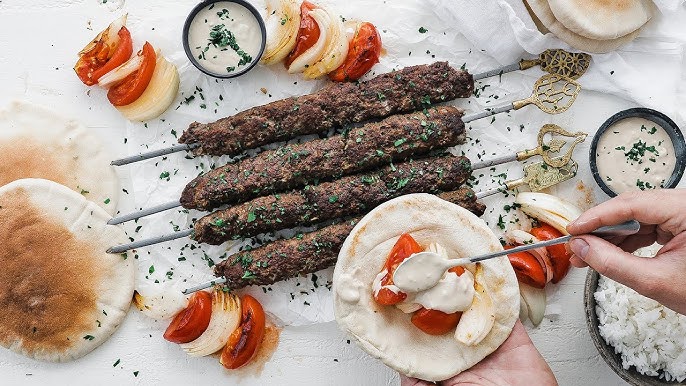
Once the mixture is prepared, it is molded by hand around flat metal skewers into elongated, uniform cylinders. Flat skewers are highly preferred over round ones because they grip the meat securely and prevent it from spinning when turned.
The grilling process is rapid and high-heat. While a charcoal grill yields the most authentic smoky flavor, a cast-iron grill pan works exceptionally well indoors. The exterior is quickly seared to lock in the flavorful juices, creating a charred, caramelized crust while maintaining a tender, moist interior.
The Art of the Table Spread
In Lebanese tradition, Kofta is rarely served alone; it is the centerpiece of an elaborate, interactive feast. It is customarily presented on a platter over warm flatbreads, which conveniently catch any dripping juices.
Accompanying the skewers are grilled vegetables, primarily charred tomatoes and sweet onions. Fresh elements like biwaz—a bright relish made of sliced onions, parsley, and sumac—provide a crisp contrast.
No Kofta meal is complete without a selection of dipping sauces. Creamy, garlic-rich toum or a nutty tahini-based sauce are standard pairings. Additionally, a cooling yogurt-cucumber dip (tzatziki) balances the warm spices of the grilled meat beautifully.
A Universal Dining Experience
What makes Lebanese Kofta enduringly popular is its versatility. Diners can slide the warm meat off the skewer directly into a pocket asuderestaurant.com of pita bread, loading it with grilled tomatoes, a smear of sauce, and pickled turnips to create a perfect sandwich. Alternatively, it can be served over a bed of fragrant vermicelli rice alongside a fresh fattoush salad. Simple to prepare yet deeply complex in flavor, Lebanese Kofta stands as a true testament to the timeless appeal of Middle Eastern grilling.