
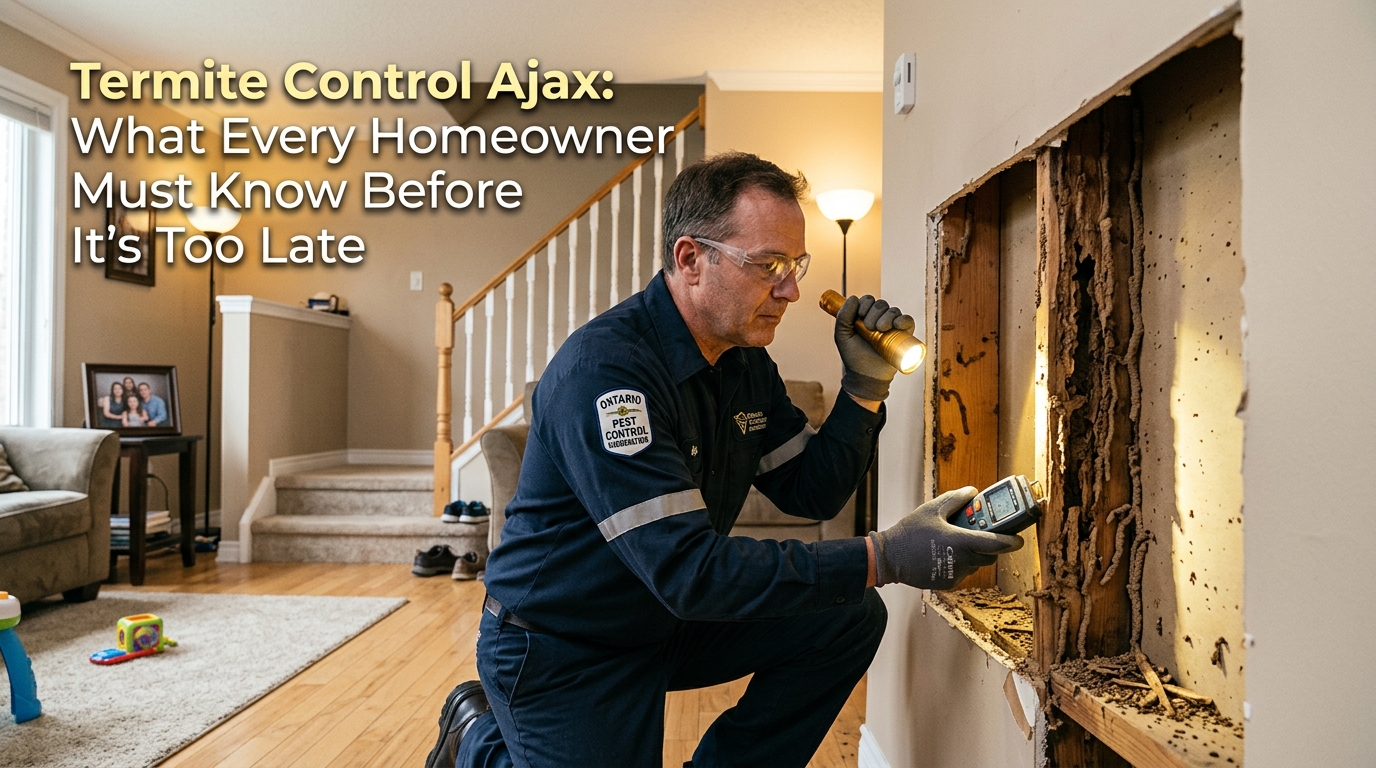
For homeowners in Ajax, the dream of property ownership comes with a silent, underground threat that most people never see coming. While visible problems like roof leaks or furnace failures demand immediate attention, termites operate completely out of sight, working twenty-four hours a day, seven days a week, quietly destroying the structural foundation of your home. If you live in Southern Ontario, understanding termite control in Ajax is not just a good idea; it is an absolute necessity for protecting your most valuable financial investment.
The Growing Threat in the Durham Region
Ajax sits along the beautiful shores of Lake Ontario, but its geography also makes it one of the most favorable environments for the Eastern Subterranean termite. These insects thrive in moist soil and temperate climates, both of which are abundant in this region. As residential development continues to expand across Durham, disturbed soil and densely packed housing provide termites with unlimited access to structural wood.
The real danger is their invisibility. Unlike ants or cockroaches that appear on your kitchen counter, termites stay hidden behind drywall, beneath floorboards, and inside crawl spaces. By the time you notice a soft spot in your baseboard or a door that no longer closes properly, the colony has likely been quietly feeding for several years. This is exactly why waiting for signs is never a safe strategy.
Know Your Enemy: Eastern Subterranean Termites
In Ontario, the primary species homeowners deal with is the subterranean termite. Unlike drywood termites found in warmer regions, these pests live in the soil and construct complex tunnel systems to reach wood inside your home. Their food source is cellulose, a material found in wood, paper, and cardboard, all of which are extremely common in modern Canadian homes.
Because they need moisture to survive, termites build “mud tubes,” narrow, pencil-thick tunnels made of soil and saliva to travel safely from the ground into your home’s structure. These tubes shield them from dry air and predators. If you spot these brown, vein-like tunnels climbing your foundation wall or running along a basement joist, your home is already under attack.
The True Cost of Doing Nothing
Waiting and watching is the most expensive decision a homeowner can make. Termites cause hundreds of millions of dollars in property damage across Canada every single year. To make matters worse, standard Canadian home insurance policies rarely cover termite damage because it is classified as a preventable condition, meaning every dollar of repair comes directly out of your pocket.
When termites compromise a load-bearing beam or floor joist, the fix is never simple. Repairs typically involve structural shoring, removing finished drywall, and extensive carpentry work. Beyond the repair costs, a history of termite activity can seriously damage your home’s resale value. Buyers will either walk away or demand large price reductions when a previous infestation is disclosed during closing.
Effective Termite Control in Ajax: A Complete Strategy
Proper termite control requires far more than a single spray treatment. A truly effective approach uses integrated pest management, addressing the colony at its root while building lasting protection around your entire property.
1. Professional Inspections: Your First Line of Defense
A professional inspection goes far beyond a casual walk-through. Trained technicians measure moisture levels inside walls, tap wood to detect hollow areas, and look for frass (termite droppings) or discarded wings. In the Durham Region, late spring is swarming season when winged reproductive termites emerge to start new colonies. If you see these swarmers inside your home, it is a clear sign that a colony is already living within your structure, and immediate action is required.
2. Liquid Soil Treatments: Creating a Protective Barrier
One of the most effective methods used in Ontario is injecting liquid termiticides into the soil surrounding your foundation. This creates a continuous treated zone that termites cannot avoid. Modern non-repellent termiticides are completely undetectable to insects that walk through the treated soil, absorb the active ingredient, and unknowingly carry it back to the queen and the rest of the colony, neutralizing the entire nest from within.
3. Baiting Systems: A Targeted Alternative
Where liquid treatments are difficult to apply due to environmental regulations or structural limitations, baiting systems offer a reliable alternative. Monitoring stations are placed strategically around the property. When termite activity is detected, the wood inside the station is replaced with a slow-acting bait that prevents termites from molting properly, eventually causing the entire colony to collapse.
Prevention Tips Every Ajax Homeowner Should Follow
While professional treatment is essential for an active infestation, these steps will make your home significantly less attractive to termites in the first place:
- Control Moisture: Repair leaking outdoor faucets immediately and ensure downspouts carry water at least three feet away from your foundation. Damp soil is a termite magnet.
- Eliminate Wood-to-Soil Contact: Maintain a clear gap between the soil and any wooden siding, door frames, or structural elements. Support decks and fences with concrete piers wherever possible.
- Clear the Perimeter: Never stack firewood against your house, and keep mulch several inches away from the foundation wall.
- Seal Foundation Cracks: A crack as narrow as 1/16th of an inch is wide enough for a subterranean termite to enter. Inspect and seal your foundation regularly.
Why DIY Treatments Almost Always Fail
Over-the-counter termite products are simply not powerful enough to reach a queen buried deep underground. Worse, improper application can cause the colony to split and relocate to a different part of your home, making the eventual professional treatment far more complicated and expensive. DIY attempts almost always delay proper treatment and allow damage to continue.
Working with a licensed local professional who understands Ajax’s specific soil conditions and Ontario’s pesticide regulations ensures the treatment is both legal and genuinely effective. This is especially important near the Great Lakes watershed, where strict environmental rules apply.
Frequently Asked Questions
How do I tell the difference between termites and carpenter ants?
Carpenter ants excavate wood to build nests, but do not eat it; they leave behind a sawdust-like frass. Termites actually consume the wood, leaving behind a ribbed or layered appearance with traces of mud inside the galleries. Physically, termites have straight antennae and thick waists, while ants have elbowed antennae and pinched waists.
How long does a termite treatment last in Ajax?
A high-quality liquid soil treatment typically protects a home for five to ten years, depending on soil conditions and weather. Baiting systems require ongoing monitoring but provide continuous protection as long as annual maintenance is kept up.
Is the treatment safe for my family and pets?
Yes. All products used by licensed pest control professionals in Ontario are approved by Health Canada. When applied correctly by a certified technician, treatments are targeted at soil and structural voids and pose minimal risk to the people and animals living in the home.
Can termites chew through concrete?
No termites can eat through concrete. However, they are extremely skilled at locating microscopic cracks in foundation blocks or small gaps around plumbing pipes. They only need an opening the thickness of a credit card to enter your home.
Is one treatment enough?
A single professional treatment can eliminate an existing colony effectively. However, because Ajax is a high-activity area, annual inspections are strongly recommended to ensure that new colonies do not breach existing barriers over time.
Conclusion
Protecting your home in the Durham Region demands consistent vigilance, smart maintenance habits, and the support of qualified professionals. Termites are silent by nature, and that silence is exactly what makes them so dangerous. By the time visible symptoms appear, your home’s structural integrity may already be seriously compromised.
Whether you are dealing with an active infestation or simply want to establish a strong preventative barrier, the most important step is to act early before the damage becomes irreversible. For trusted, local expertise and a genuine commitment to keeping your home safe and structurally sound, reach out to the professional team at Pesticon today.